http://aaldef.org/blog/emil-guillermo-on-petas-virtual-reality.html

Racism is taught

Privilege can lead to feelings of superiority which can lead to racism.
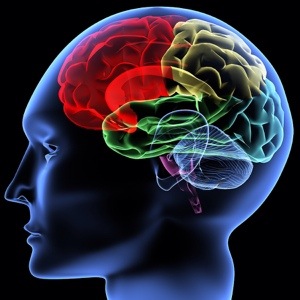
Virtual reality COULD produce empathy for victims of racism.
http://aaldef.org/blog/emil-guillermo-on-petas-virtual-reality.html
Racism is taught
Privilege can lead to feelings of superiority which can lead to racism.
Virtual reality COULD produce empathy for victims of racism.

“Indeed, while Americans only constitute 4.6% of the world’s population, we consume 80% of the global opioid supply and 99% of the world’s hydrocodone supply.”

40 Americans die from prescription painkiller overdose, 15,000 per year. These statistics parallel a 300% increase in the sale of opioid medications since 1999.
I have a very bad case of chronic pancreatitis, one of the most painful diseases humans develop. Though principally a disease of alcoholics, I have been a purely social drinker (until a decade ago when I stopped drinking even socially). Of course, every time I would go to the emergency room because of an exacerbation, I was accused of being an alcoholic, seeking powerful pain-killers, and lectured about the disease being of my own making. It was only after I informed the ER doctors that I was a functioning member of society, practicing environmental law and teaching graduate courses at a local university, AND informing them I did not want pain-killers because I was already having my never-ending pain at the hospital’s pain management center, and faithfully wore my extremely strong fentanyl patches and oxycodone for break-through pain, frequently requesting my pain doctor to reduce the amount of fentanyl I take, only to realize that I could not make it through a day or night with a fentanyl patch less than 50 mc.
The article linked below discusses the terrible tragedy of abusers of prescription painkillers and how their abuse of the prescription medications eventually take over their lives because they can no longer afford the painkillers and turn to the less expensive and more dangerous killer–heroin.
http://www.salon.com/2014/08/31/americas_painkiller_nightmare_legal_drugs_are_laying_waste_to_our_families_and_friends/?source=newsletter
(America’s painkiller nightmare: Legal drugs are laying waste to our families and friends)

“Like [the author’s brother, many ended up turning to heroin after their pills became too expensive or scarce; in 2011, 4.2 million Americans age twelve or older reported using heroin at least once in their lives, and nearly half of young IV heroin users reported that they abused prescription opioids first. Like these kids, [the author’s brother] was the last person you’d picture with a needle in his arm; yet they were all dying as heroin addicts: between 2006 and 2010, heroin overdose deaths increased by a staggering 45 percent. I wanted to understand why this was happening, so I quit my job as a legal journalist and began traveling around the country in the hopes that chronicling the experiences of other families affected by the trend would offer some answers.”
I have friends and relatives who have followed the same path as the author’s brother, and judging from the author’s conclusions, at some point, the “addict’s” brain changes and their craving was no longer to get a high, but simply to “feel normal.” In essence, they were building their own prisons around themselves without any benefit to them, but destroying lives of wives, sons and daughters and friends as collateral damage. The author concluded, “Not one addict I interviewed mentioned the word fun in connection with his or her addiction. By contrast, they knew they were hurting everyone around them, and they hated themselves for it. They lived a tortured existence that painted this horrible realization with a physical dependence on a drug that would send them into excruciating fits of withdrawal if they if they failed to get their next dose.” Heroin addicts who began first abusing prescription drugs NO LONGER “GET HIGH”, but

crave a new dose simply to avoid the deleterious effects of withdrawal.
My point in writing this post is to question why so many young people feel the need to abuse prescription painkillers when they watch their friends becoming heroin addicts and requiring more and stronger doses simply to feel normal–forget getting “high.” My best friend started abusing prescription painkillers (oxyContin–a painkiller prescribed for low back pain–a long acting opioid which he abused by scraping off the coating that allows the powerful drug to be releases slowly into a person’s bloodstream, crushing it, and snorting it, getting 100% of the drug in one snort instead of being released slowly into his system over a 12 hour period) for a legitimate purpose, but abused it to the point he needed more and more to get his high.
My friend, an only child, who was like my brother, had roughly the same upbringing as did I. We started middle school together and then remained friends through high school and later roommates in college and law school. He was an excellent trial attorney and had a wonderful family who nearly every weekend during college football and college basketball seasons had dozens of friends over to watch the games, swap stories and eat a large meal he would nearly always provide. At one weekend get-together, I noticed his speech was slurred and he staggered as he played a game of ping pong with one of his son’s friends, eventually falling flat on his face, apparently losing interest in watching the games with our crew. I took him aside and told him I knew someone was wrong and told him I would help him any way I could. At this point, I had developed chronic pancreatitis and did not drink even a single beer at the gatherings. He took me into his master bedroom and showed me how he shaved his OxyContin tablets, snorted them and got a tremendous high with him. I suggested that he might want to get some help, but he told me bluntly that he “had it all under control” and could quit anytime he wanted and just needed some relief from the stress of his law practice–where he was an excellent criminal defense attorney, representing child-molesters and all manner of monsters in his practice and he had a quite high acquittal rate. I hugged him and told him that if he ever felt like the pills were “getting the best of him” to contact me and I would ensure that he received help. He was such a gregarious and wonderful host that I had been with him every weekend for the last two years while he abused drugs. I never received the request for help, but did learn that he was being taken against his will (in his words) to save his marriage and family, “though, if THEY would just give him some time, he could beat this on his own.”

Prescription pain killer abuse actually changes brain chemistry and lowers one’s IQ and critical reasoning skills.
After my friend returned from a very expensive 60 day stay in a rehabilitation center, he remained clean for approximately 30 days, and then began using heroin and other street drugs, dating crack whores and eventually left his wife and family (including two wonderful sons who have always called me Uncle T and whom I still watch over, feeling guilt for not doing more, though my friend says if I had tried to stop him, he would have excluded me from his life because the drugs became the ONLY thing he cared about and would simply cut off from his life anyone who even questioned him about it.). He also lost his house, his law license and remains in and out of rehabilitation.
Despite my guilt, another issue with which I grapple, is how my friend became addicted almost immediately upon his receipt of an OxyContin prescription for a legitimate purpose (a ruptured disc in his lower back), and eventually threw away anything and everything good in his life for his new mistress, drug addiction. Yet, when I was diagnosed with chronic pancreatitis, I was placed on high doses of fentanyl and oxycodone for breakthrough pain. I have never had a craving to take more of either drug and I refuse when admitted to a hospital for a pancreatic exacerbation to allow them to place me on Dilaudid or other strong opioids and insist that they keep me on my normal dose of fentanyl. I also asked, before the law made it mandatory, that my pain management specialist run random blood and urine tests on me to ensure that I did not slide down the slippery slope of addiction.
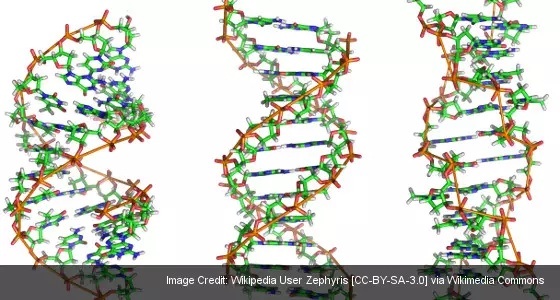
Because my friend and I had roughly the same environment from the time we were 11 through our 40s, I cannot make sense out of the fact that he became an addict almost immediately when he was initially prescribed opioids. I, though, who was prescribed even stronger opioids and somehow managed to continue my law practice and have now retired comfortably and have NEVER had a single craving for my medications. I’m guessing it has something to do with DNA and a gene (maybe already identified) that predisposes certain people to become addicted to opioids, and my friend lost out on the DNA Russian Roulette, and I was spared this gene, though I have more defective genes than my share.
If anyone has a thought about what predisposes people from similar or, in my case, nearly identical environments to become addicted to opioids when others do not develop the same cravings that destroy the lives of those with the predisposition, please share your thoughts. And, if there is anything else I can do to help my friend be freed of his opioid addiction, please leave me a comment or send me advice through my email–terryclarke@outlook.com.
Prescription pain killer abuse actually changes brain chemistry and lowers one’s IQ and critical reasoning skills.

It is very disappointing to see what the rest of the world thinks of our human rights practices when we condemn so many nations for their alleged poor human rights records. The article linked below paints a bleak picture of the U.S.’s “post racial” society.
“When it comes to human rights, the United States must practice at home what it preaches abroad.”

UN watchdog group criticizes U.S. record on human rights

UN
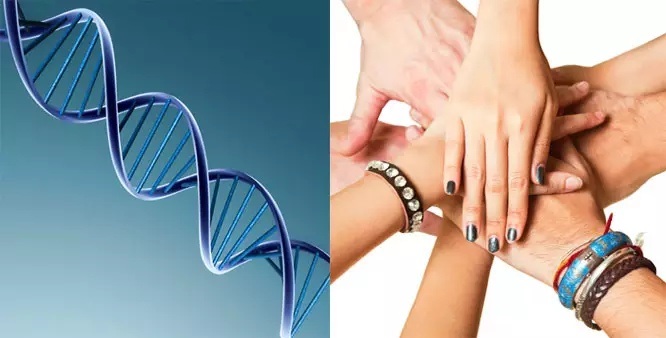
I wasn’t prepared for the scientific discovery described in the video linked above–that we choose our friends on the basis of our shared genetic material–particularly the DNA associated with the sense of smell. Although science seems to embrace this idea, I remain skeptical because of the large circle of racially diverse friends I have.
The video also has another interesting finding–evolution appears to speed up among friends with shared DNA. I found the video interesting and think it would be worth your while to take a look at it.
A great blog post about bullying, particularly against Asian Americans, created by a physician with a mix of high quality videos and interesting and informative narrative. I would encourage all to view this post who have been victims of bullying, parents of bullied victims, or simply bystanders witnessing acts of bullying but chose not to speak up.

Watching your children succeed in school is rewarding. What happens when your child dreads going to school? There could be a few reasons why children would rather not be at school, especially after summer fun. In case it is more than the back-to-school blues, it is important be aware of the under-recognized yet wide-spread social issue of bullying.
Bullying can take place in various forms—physically, emotionally, psychologically, and now, takes place more and more online (it’s called cyber bullying). The truth is, bullying can affect your child’s health and academics. Children who are bullied are much more likely to experience depression and anxiety, substance abuse, and decreased academic achievement.
Watch this video to get an insight into the world of bullying. This short film was created by Project AHEAD interns to bring to light the effects of bullying.
Bullying can be an especially devastating problem in the Asian American…
View original post 350 more words
Although I am firm in my Russian Orthodox faith, the idea that we are living in a virtual world has intrigued me since I first watched The Matricx Trilogy. This blog post does a great job of exploring this notion of a virtual reality in which we all currently reside.
The Japanese American Citizens League (JACL) issued the following statement on Aug. 7, and I believe the short statement is certainly worth your time.
I have written about microagression racism before and the JACL describes both overt and microagression racism in its statement.

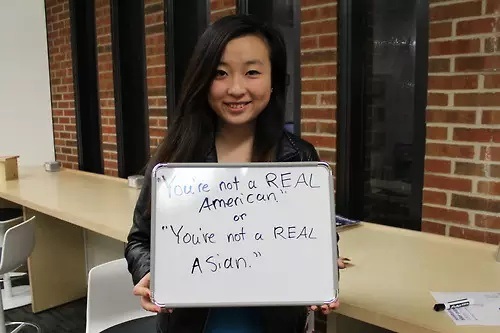
I have written several posts about the unaddressed bullying of my Asian American daughter (who excels academically and athletically) at her former school. After some brief research, I soon learned that my daughter’s mistreatment was not unusual for Asian American students attending American public schools. In response to this bullying epidemic and other issues facing the Asian American community, President Obama established the AAPI Initiative to seek redress for these issues.(See http://www.whitehouse.gov/aapi.
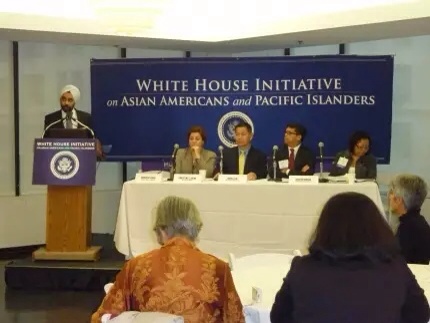
The article linked below contains numerous resources of assistance to one seeking information on bullying of Asian students.

Mountaintop-mining (a form of surface coal mining where the tops of Appalachian mountains are removed to expose valuable coal reserves) and “fracking” (a form of accessing oil and gas reserves that many claim to be destroying water quality and causing subsidence and small earthquakes), are both forms of extracting natural resources for energy production. Both processes involve highly charged support or opposition by the coal/gas & oil industry (and their service industries), on one side, and environmental groups (and their supporters) on the other.
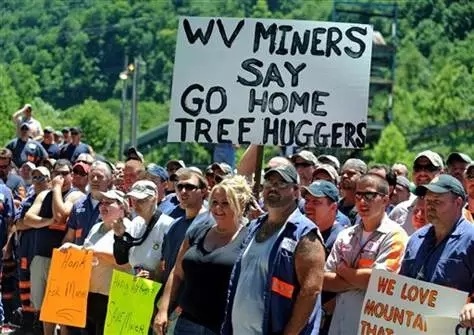
Pro-Mountaintop Mining Coal Miners

Leveling Appalachia
As an environmental attorney working in Appalachia, I have had the misfortune of working on both mountaintop mining issues and oil & gas fracking issues. Unlike other highly charged issues on which I have worked during my career, there is virtually no opportunity for any compromise on either side of these issues, turning political policy decisions on the subjects into metaphorical IEDs, ready to explode and alienate a large segment of voters, regardless of which side benefits from a given policy.

Fracking Policy–Supporters & Opponents are Polar Opposite

Anti-Fracking Process Description
Although I have worked with Native American tribal liaisons regarding ancestral artifacts and human remains, I have never worked with them on issues related to natural resource extraction/exploitation–though I did discuss the issue hypothetically in a graduate level Environmental Ethics course I taught as an adjunct professor. As expected, the students in the course were divided in their strongly held beliefs on both sides of the issue of whether natural resources should be allowed to be removed by private industry from Native American lands, with obvious environmental effects, if the action would result in cheaper electric bills.

Native American view of land as sacred
The Nation of Change article linked below shows one Native American tribe’s views toward the practice of “fracking” and the effects this process will have on their traditional lands.
Native Americans Launch ‘Love Water Not Oil’ Ride to Protest Fracking Pipeline

Anishinaabe Native American Activist Poster

Anishinaabe Native American Dance Troupe
I would be interested in receiving feedback on readers’ particular views on these two natural resource extraction methods.

The death of privacy in the digital age
http://www.kentucky.com/2014/08/19/3387373_vincent-cao-too-many-believe-that.html?sp=/99/349/&rh=1
In the past I did harbor some measure of concern about my social media privacy, but eventually I came to the realization that there was no longer a reason for my concern–Big Brother has (or will have) all of my posted information anyway . .. so there is no need to worry. I simply strive to be a little more cautious about what I post to social media or what I say in email to friends.
I do, however, constantly preach to my teenage daughter about the need for caution when using social media, even though she has yet to give me a single reason to question her judgment on such matters. When I see some of the posts she shows me from her classmates, I cringe about the many interviews and opportunities that will be denied them by prospective employers or boards reviewing applications to professional schools.
The linked article above provides a very good description of the current state of privacy in our addicted-to-wifi society and our “digital thumbprint.”

Digital fingerprint–evidence for the rapidly approaching future

 Posted with Blogsy
 terryclarke blog